
Throughout history, technology has reshaped how we create and think, bridging the gap between human imagination and practical execution. In the 19th century, the invention of the metal paint tube revolutionized art, empowering movements like Impressionism to flourish. This year, we are going to witness a similar transformative movement with Artificial Intelligence (AI) agents reshaping workflows, reasoning, and the relationship between data and creativity. Both innovations serve as examples of how tools amplify human potential, creating new paradigms for work and thought.
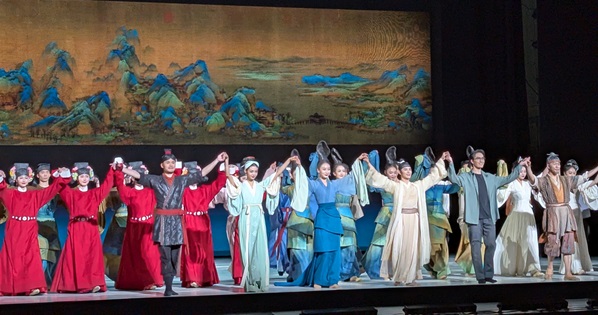
Adding to this dialogue is the cultural marvel “只此青绿” (The Journey of Legendary Painting), a performance that brings ancient Chinese art to life, demonstrating the timeless interplay between tradition, creativity, and modern technology.
The Journey of Legendary Painting: 只此青绿
“只此青绿” is a theatrical performance inspired by the legendary Chinese scroll painting “A Thousand Miles of Rivers and Mountains” (千里江山图), created by the 18-year-old prodigy Wang Ximeng during the Song Dynasty over 900 years ago. This iconic work is celebrated for its meticulous brushwork and stunning use of mineral-based blue and green pigments, evoking a majestic and dreamlike landscape.
The show, blending dance, music, and multimedia technology, reimagines the creation and essence of this masterpiece, inviting the audience to step into the painting itself. It merges ancient artistry with cutting-edge stage design, utilizing dynamic projections, lighting, and choreography to create an immersive experience.
In this sense, “只此青绿” serves as a modern testament to how innovation enhances our connection to historical art, making it accessible and emotionally resonant for contemporary audiences.
A Parallel with John Constable and Western Art
Much like John Constable’s (1776–1837) journey in the Romantic movement, “只此青绿” reflects the dedication of artists to capturing the beauty and spirit of the natural world. While Constable’s focus was on English landscapes, Wang Ximeng’s masterpiece embodies the grandeur of Chinese scenery, emphasizing harmony between humanity and nature.
The performance also parallels the technological shift of the metal paint tube, which enabled outdoor painting. Here, the stage serves as a “new canvas,” where traditional brushstrokes are reinterpreted with technology, just as Impressionist painters redefined art with portable paints.
Technology and Tradition: A Meeting of Eras
The innovation behind “只此青绿” highlights how technology bridges the gap between ancient and modern worlds:
1. Reviving Ancient Art: The use of multimedia projections breathes life into Wang Ximeng’s scroll, making its intricate details visible and engaging to a wider audience.
2. Enhancing Emotion: Dynamic lighting and soundscapes transform the painting’s serene beauty into a sensory experience, inviting viewers to not just see but feel its essence.
3. Inspiring Creativity: The reinterpretation of traditional Chinese art inspires a dialogue between the past and the future, much like how AI tools encourage creators to rethink conventional workflows.
AI and The Modern Artistic Journey
Just as “只此青绿” uses technology to reinterpret a historic masterpiece, AI enables modern creators to reimagine art and workflows. AI-powered tools act as collaborators, offering insights, generating drafts, and processing complex data. This synergy between human reasoning and machine efficiency mirrors the collaboration of tradition and technology seen in “只此青绿.”
Use cases for instance:
- Artists can use AI to analyze historical paintings, uncover hidden details, or recreate lost works.
- Performers and designers can integrate AI into stagecraft, choreographing dynamic scenes based on real-time audience reactions.
- Writers and researchers can draw on AI to reinterpret historical narratives, creating compelling new stories rooted in tradition.
The possibilities are as vast as the landscapes depicted in Wang Ximeng’s scroll and Constable’s Dedham Vale.
The Eternal Dance: Creativity and Innovation
From the invention of the metal paint tube to AI agents and performances like “只此青绿,” one truth remains constant: technology amplifies creativity. Whether it’s Wang Ximeng’s scroll inspiring a modern stage show or AI tools enabling creators to push boundaries, these innovations remind us that art is a bridge across time and space.
Much like “A Thousand Miles of Rivers and Mountains”, which captures the timeless beauty of China’s landscapes, modern technology like AI helps us explore new horizons, bringing the past and future into a harmonious dialogue. And in both cases, it is the human spirit—filled with curiosity, vision, and resilience—that transforms tools into timeless masterpieces.
The idea for this article came to me after watching this incredible show “只此青绿” (The Journey of Legendary Painting) last Friday. Combined with some recent trips to museums featuring works by John Constable and the Impressionists, it got me thinking about how much tools and technology shape the way art is created and appreciated. From the invention of portable paint tubes to today’s AI tools, it’s amazing how advancements keep opening new doors for creativity while keeping us connected to the past.
 This is HWu