
This question has been on my mind for some time, and I’d like to take a moment to share a few quick thoughts.
Some pre-story on what triggered this post:
I attended a fireside chat with U.S. Senator Bill Cassidy, organized by Columbia University Business School’s Digital Future Initiative Group.
The audience, which included venture capital and private equity professionals alongside business students, was keen to explore ideas for alpha generation and risk flags. However, it was Cassidy’s discussion on the need to integrate domain experts into every healthcare administration process alongside AI that truly struck a chord with me. This perspective led me to reflect on how business structures must evolve to foster effective collaboration between domain experts and technologists. Interestingly, I encountered a similar perspective from a speaker at the Beryl Elites 5th Annual Thought Leadership Conference.
Long story short:
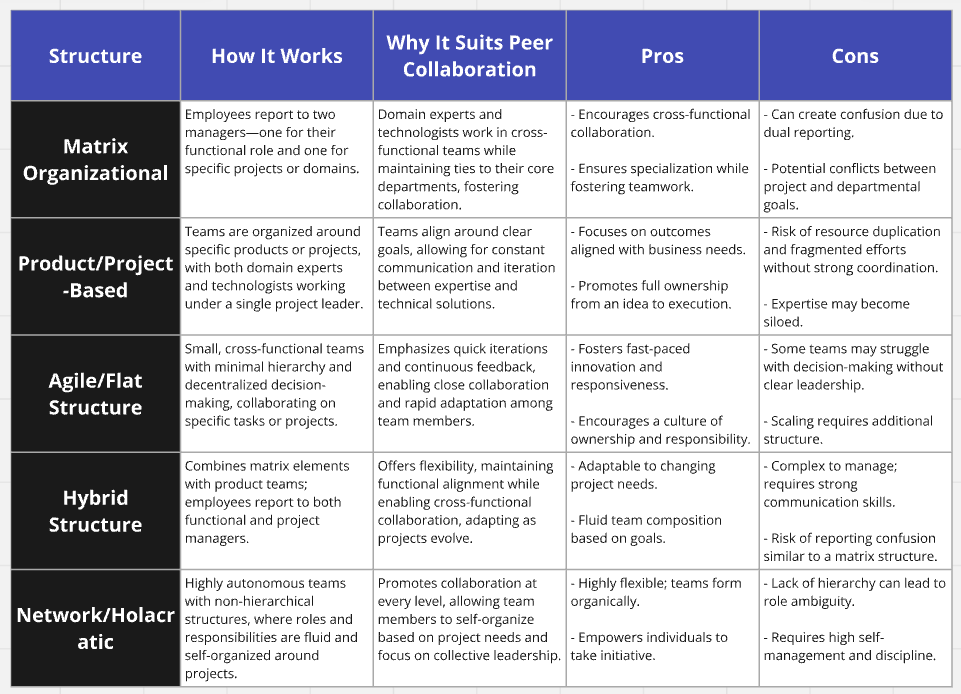
Below is a comparison table outlining my thoughts on different organizational structures that could support this type of peer collaboration:
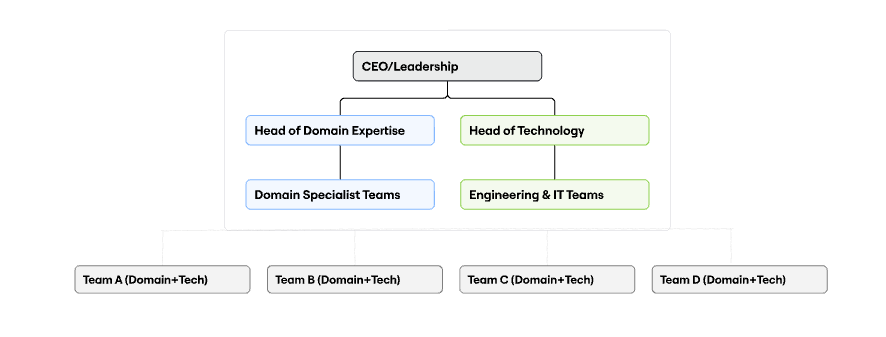
An adjusted chart may look like this in Matrix or Project-Based structures:
Final Thoughts
Ultimately, the best structure depends on the scale and complexity of the organization, the nature of the projects, and the level of innovation required. An ideal structure for domain experts and technologists working side by side will minimize silos, enhance cross-functional communication, and allow teams to adapt to project needs dynamically in this data- and AI-driven era.
 This is HWu